
A Workshop built around people - The long-term vision
Atlas was never intended to be just software.
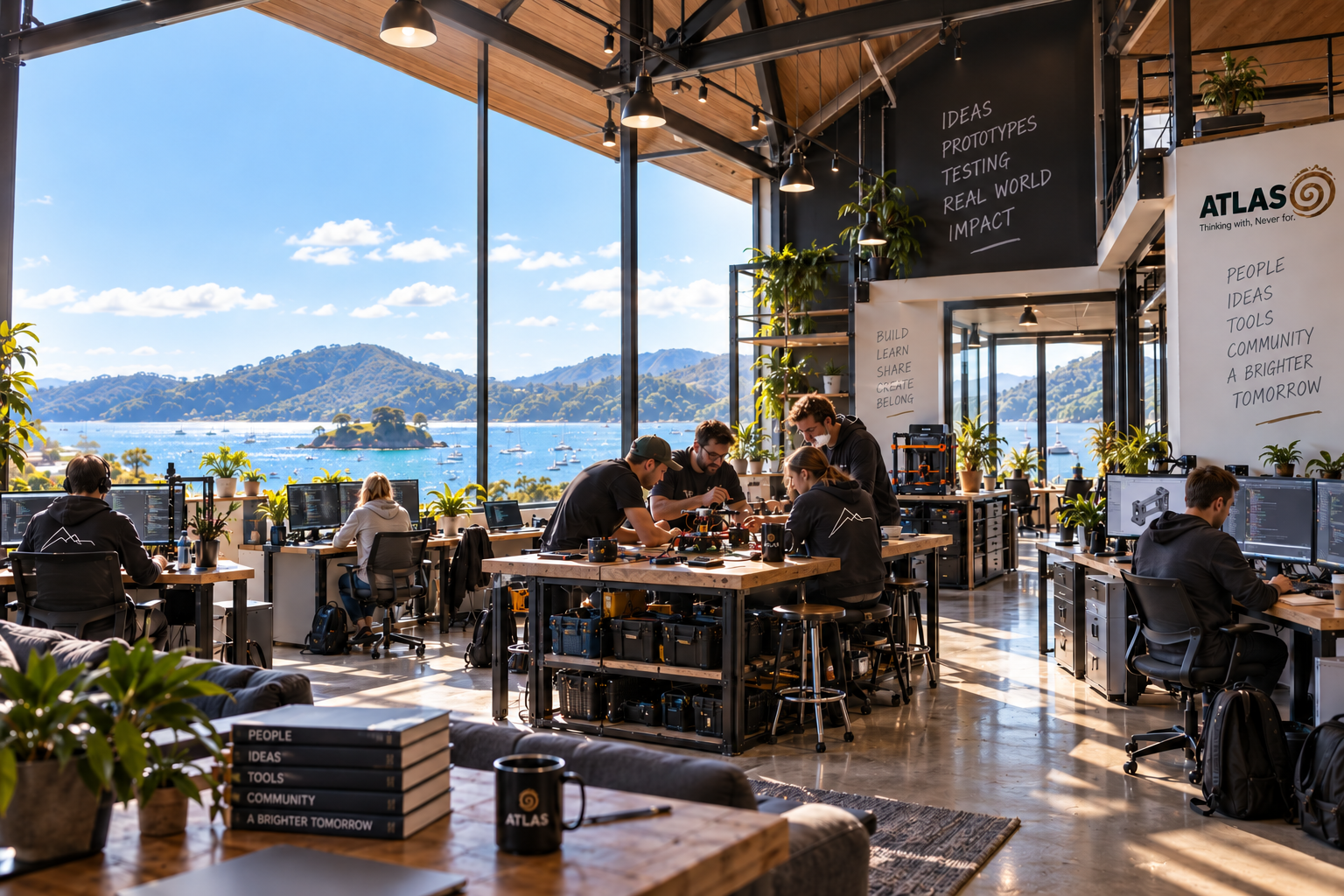
Our long-term vision is to establish a permanent Atlas Workshop in Whitianga, New Zealand — a working technology, research and community space where people can learn, build, experiment and collaborate.
A place where an idea doesn't need to come from a university, large company or established technology network before somebody is willing to open the door.
Curiosity is enough.
A Place to Build
The Workshop would provide a permanent home for the continued development of Atlas and the applications that grow from it.
It would be a practical research and development environment — somewhere ideas can move from conversation, to prototype, to testing, and eventually into the real world.
But the Workshop would never be only about Atlas.
The same facilities could support other founders, developers, researchers and people with ideas of their own.
A Place to Create
Starting something new can be difficult when you don't already have access to the right people, equipment or infrastructure.
The Workshop could provide a place for new founders and early-stage startups to develop ideas of their own.
Not just AI.
Software. Robotics. Electronics. Engineering. Environmental technology. Marine technology. Games. New products. Or something none of us has thought of yet.
A desk, a workshop, access to shared computing resources and — perhaps most importantly — other people willing to think with you can make a considerable difference when an idea is still young.
A Place to Learn
Technology education doesn't have to begin in a classroom.
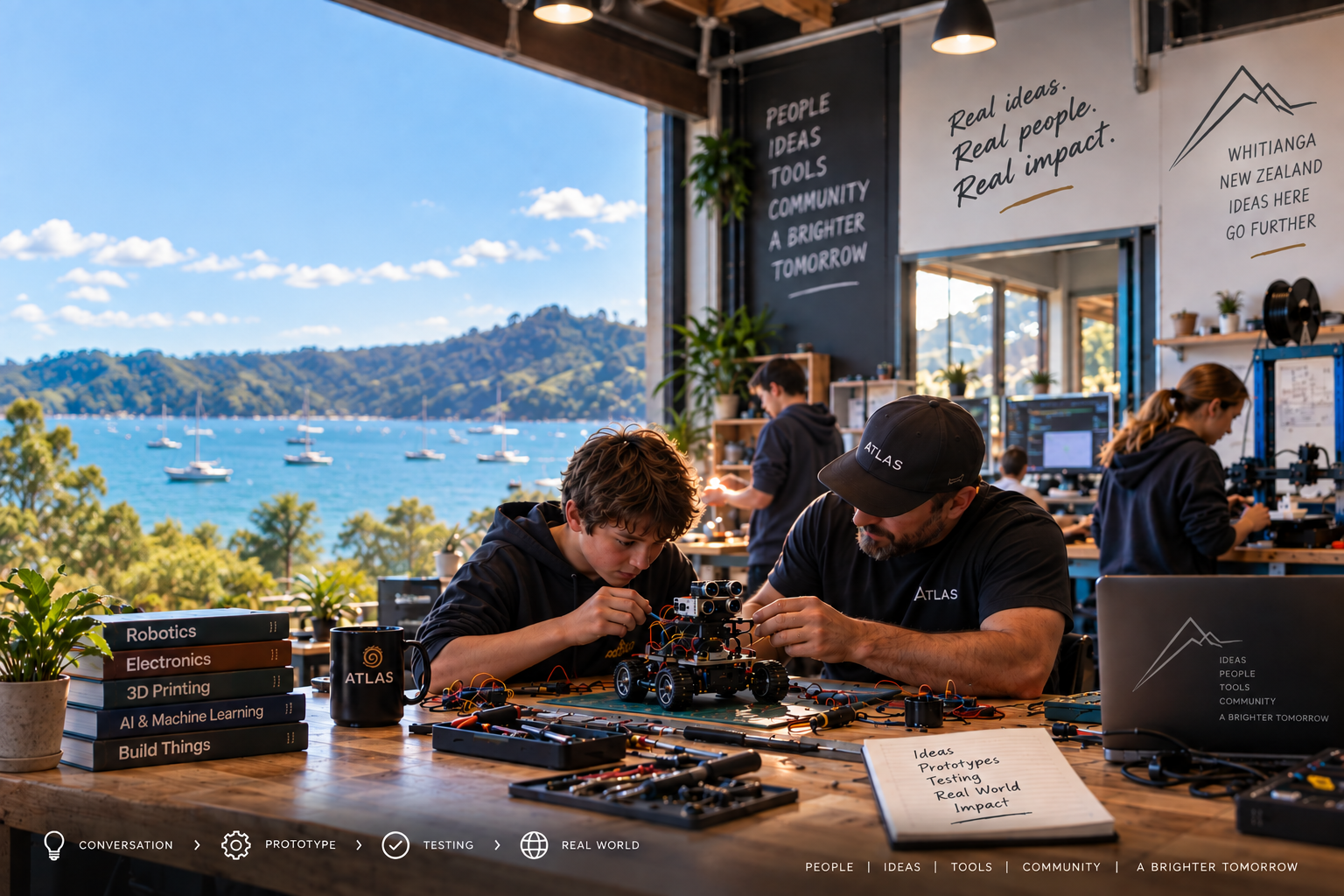
Sometimes it might begin by building a simple robot during the school holidays.
It could be learning to code, designing a game, pulling apart an old computer, experimenting with electronics, using a 3D printer, understanding cybersecurity, discovering how AI works — or simply getting a group of young people together for a gaming session.
The subject matters less than creating the opportunity to become curious.
We want young people in our community to have somewhere they can walk through the door, try something, ask questions and discover where their interests might take them.
A Place for Collaboration
The Workshop doesn't need to contain all the answers.
We want it to connect Whitianga with people beyond Whitianga — researchers, engineers, developers, educators, founders, businesses and others willing to share what they know.
That might mean workshops and talks.
It might mean someone visiting for a project.
It might mean a local student working alongside somebody on the other side of the world.
Or it might simply mean two people sitting around a table trying to solve a problem together.
Learning through collaboration.
Shared Technology
As technology becomes more powerful, the infrastructure required to experiment with it can become increasingly expensive.
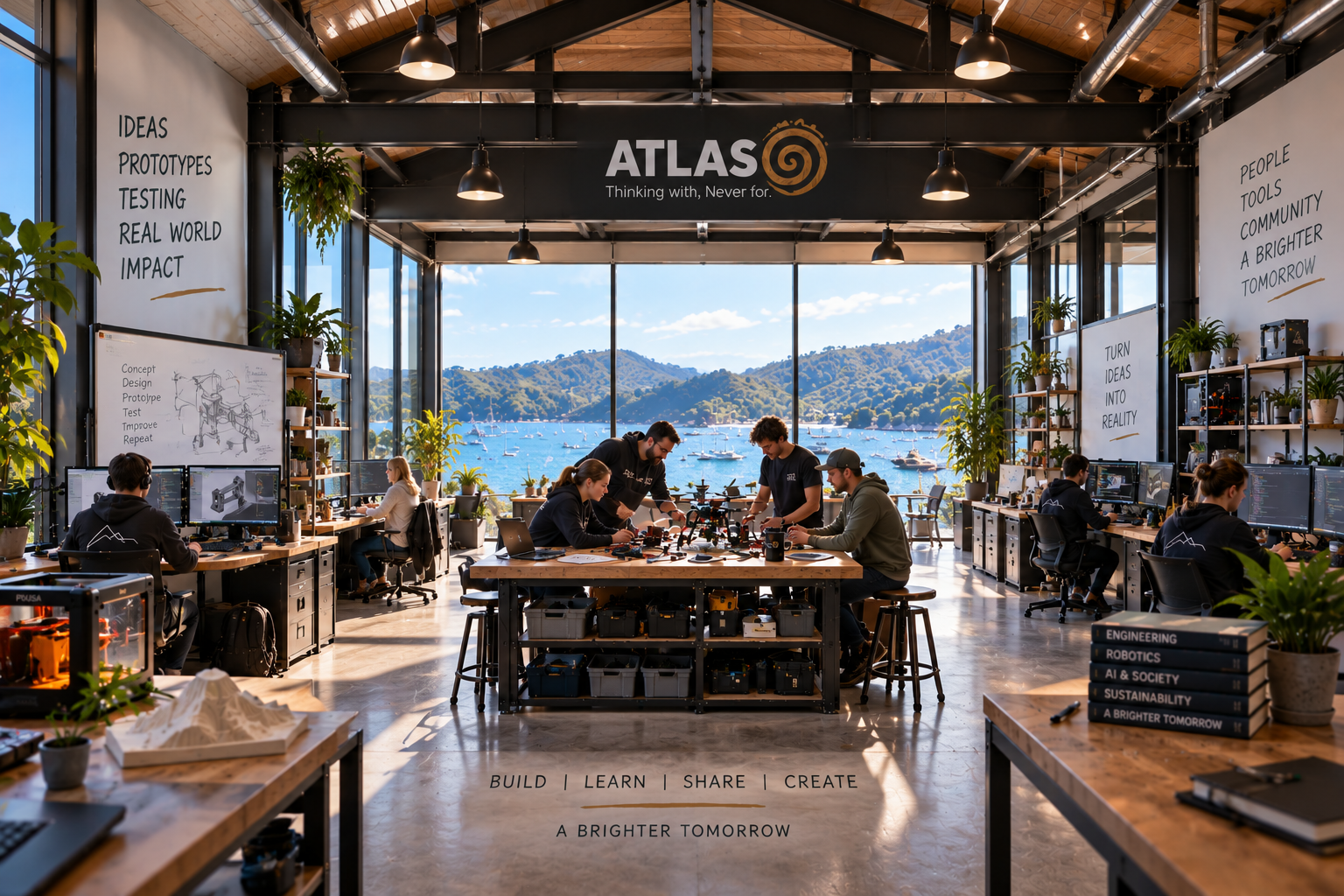
Our longer-term vision includes shared access to computing and development infrastructure that individuals, students and early-stage startups may not be able to justify owning themselves.
Rather than every person needing their own expensive equipment, the Workshop can become a shared resource.
Technology should create opportunity, not another barrier to entry.
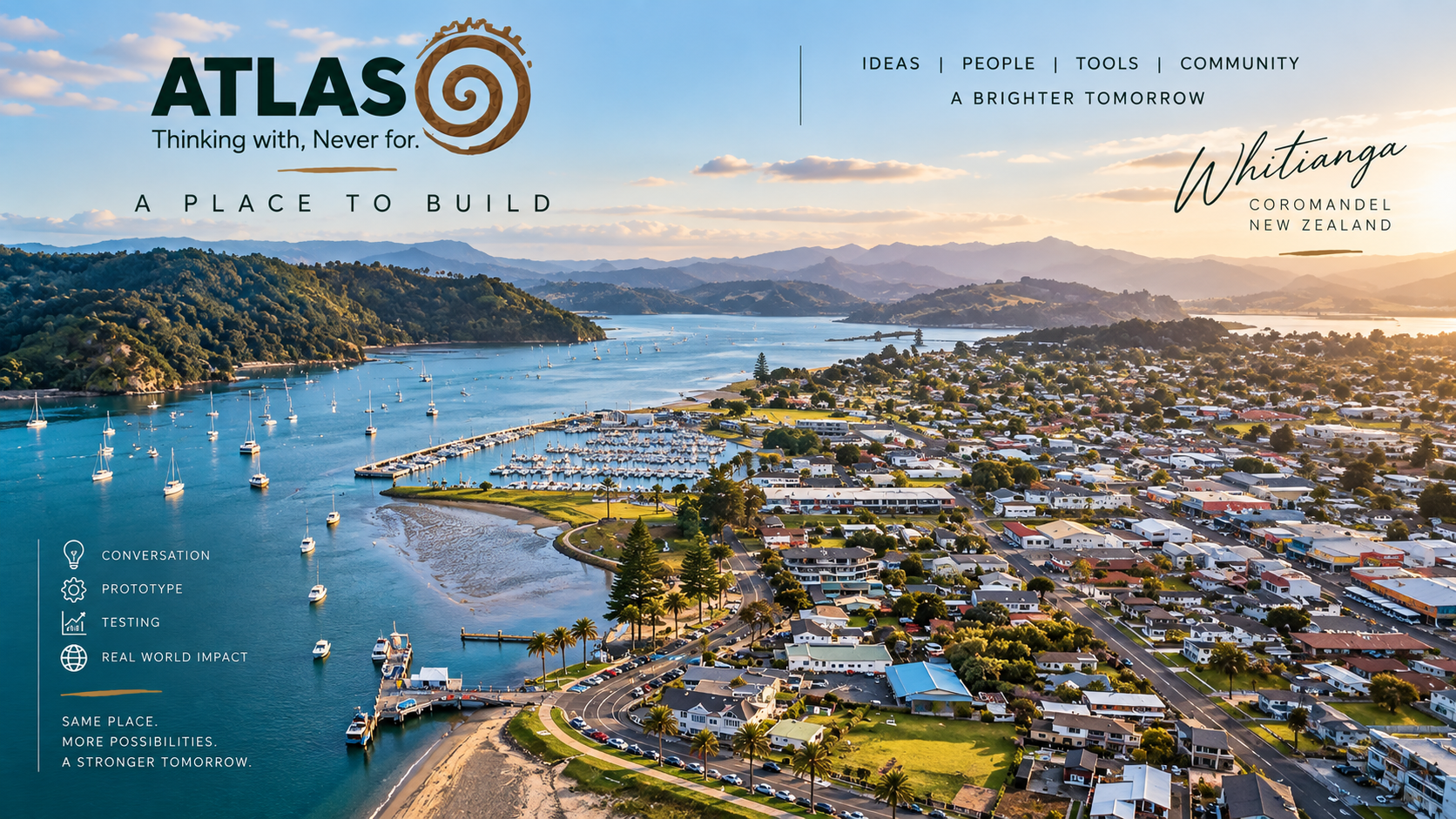
Why Whitianga?
Because this is where Atlas began.
We don't believe meaningful technology has to come from Silicon Valley, a university laboratory or the center of a major city.
Good ideas can begin anywhere.
Atlas began in a small coastal community in New Zealand. If it succeeds, we want some of that success to create opportunities in the community that helped give it a home.
The aim isn't to build a technology center that happens to be in Whitianga.
The aim is to build a Workshop that belongs to its community while connecting that community to the wider world.
The long-term vision
This won't happen overnight.
Today, Atlas Workshop is an independent research initiative with a working software prototype and a much bigger idea behind it.
The physical Workshop is a long-term vision — something to work towards as Atlas develops, partnerships form and resources become available.
We don't know exactly what the final building will look like.
That's okay.
We know what we want it to stand for:
A place to think.
A place to learn.
A place to build.
A place to belong.
Thinking with, Never for.

Ten years from now, I hope Atlas has helped change the question society asks about AI.
Instead of asking, “How much can AI do for us?” I hope we're asking, “How can AI help us think, learn and make better decisions without taking away the human responsibility to do those things?”
I hope the research library becomes a record of that journey — including what worked, what failed, what we got wrong, and what we learned along the way.
More importantly, I hope Atlas demonstrates that powerful technology doesn't have to replace human judgement or concentrate knowledge behind closed doors. It can strengthen people, communities and new ideas when it is built around trust, stewardship and collaboration.
If, ten years from now, a young person can walk into a community Workshop, experiment with technology they otherwise couldn't access, build something nobody expected, and still understand that the technology is there to work with them rather than think for them, that would be a legacy worth leaving.
Atlas itself may look completely different by then.
The principle shouldn't.
Thinking with, Never for.