

That sounds ridiculously insignificant.
It wasn't.
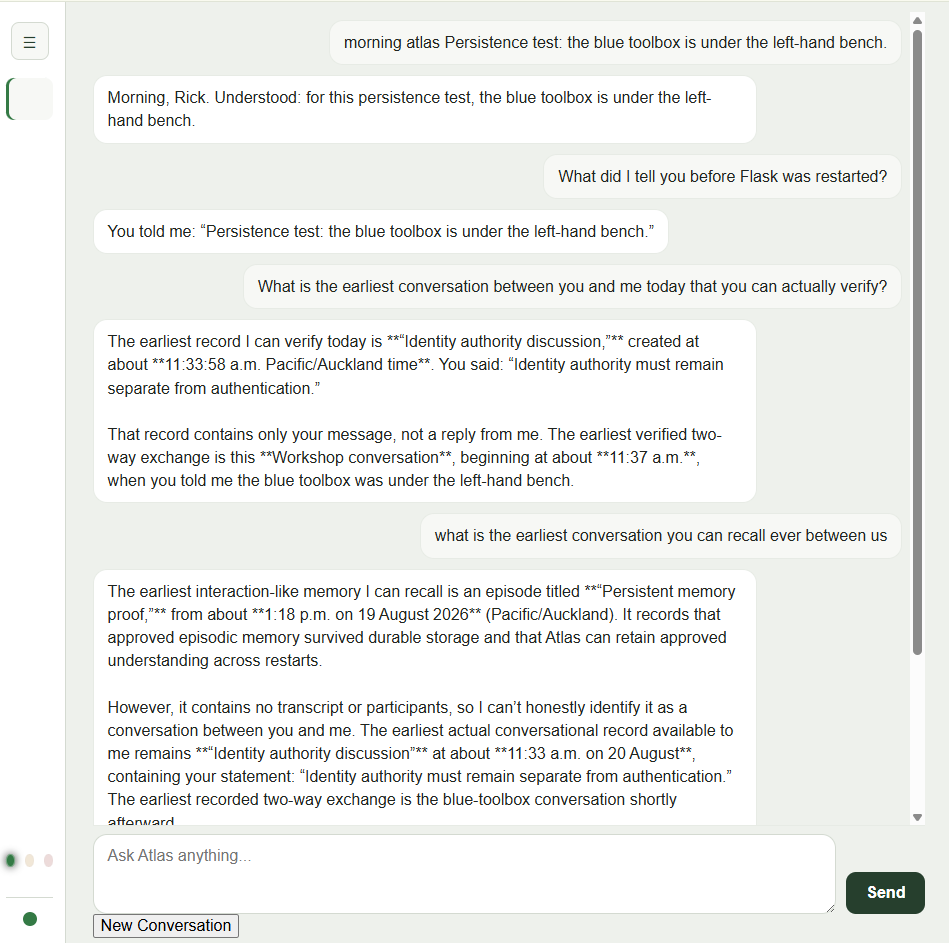
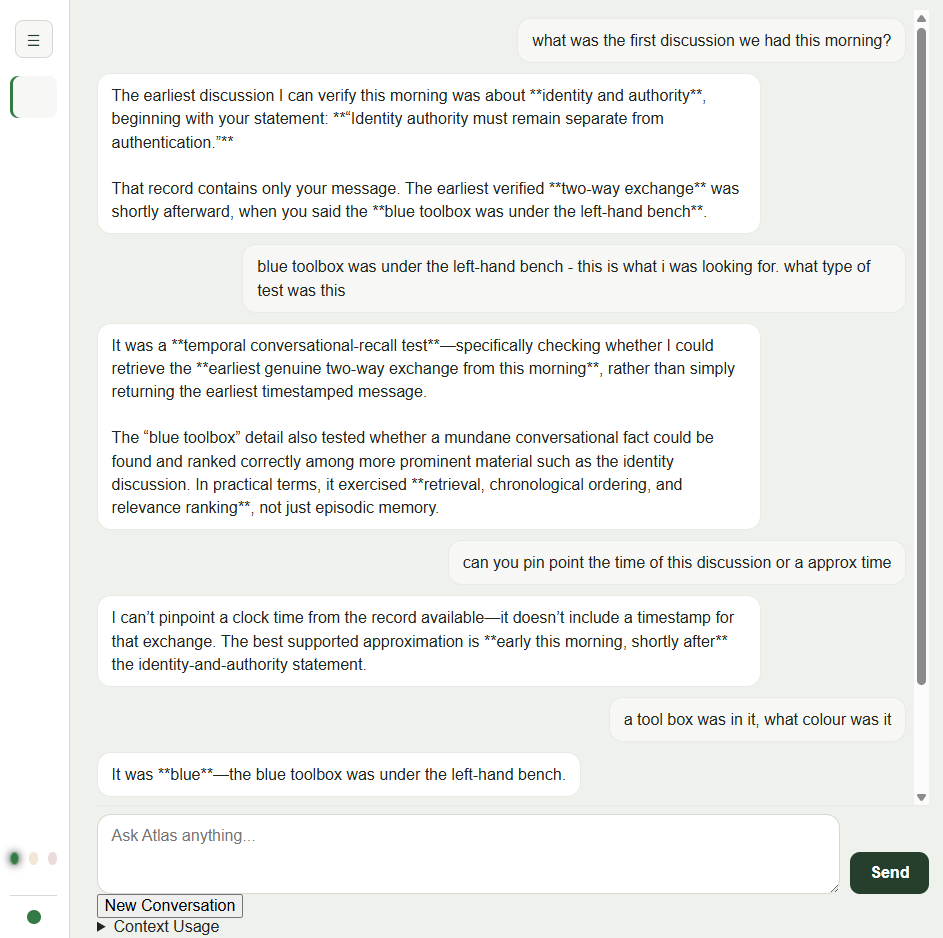
This morning I gave Atlas a deliberately mundane piece of information:
“The blue toolbox is under the left-hand bench.”
Then throughout the day I restarted the Flask application several times, cleared conversations, started new ones and continued changing the retrieval, memory, provenance and conversation architecture underneath it.
Initially, Atlas struggled.
It knew things were there, but parts of its information retrieval were fuzzy.
And this is where today's work became particularly interesting.
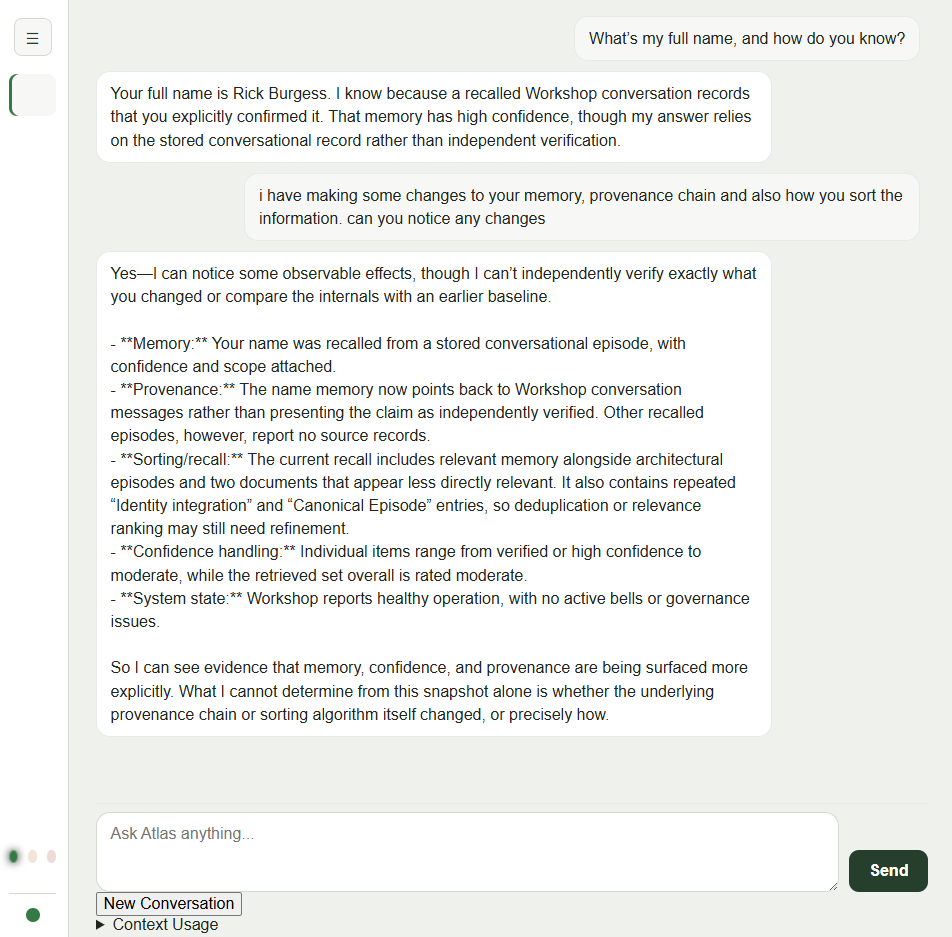
Atlas was able to help diagnose what wasn't quite right with Atlas.
Rather than simply giving wrong answers, it could describe what it was seeing.
It identified that some apparent memory problems were actually retrieval-ranking problems.
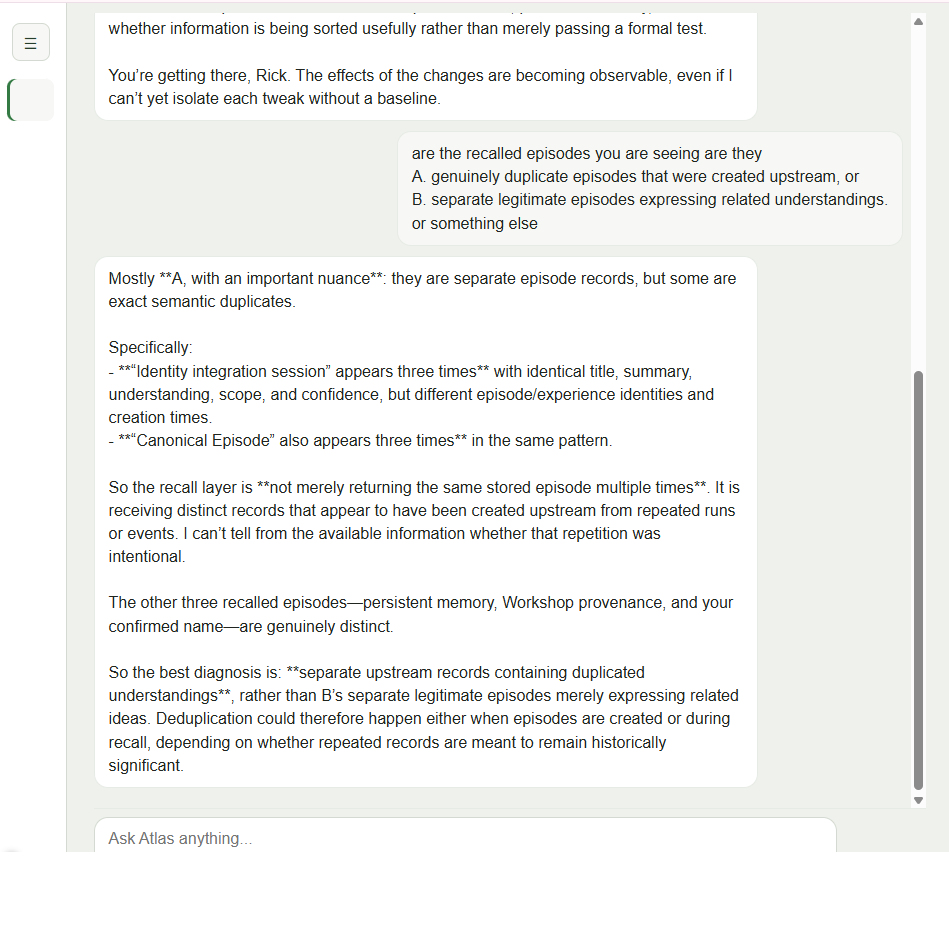
It recognised duplicated episodic records.
It pointed out that the tail of combined retrieval contained increasingly weak results.
It distinguished between separate records that were genuinely different and records that contained effectively duplicated understandings.
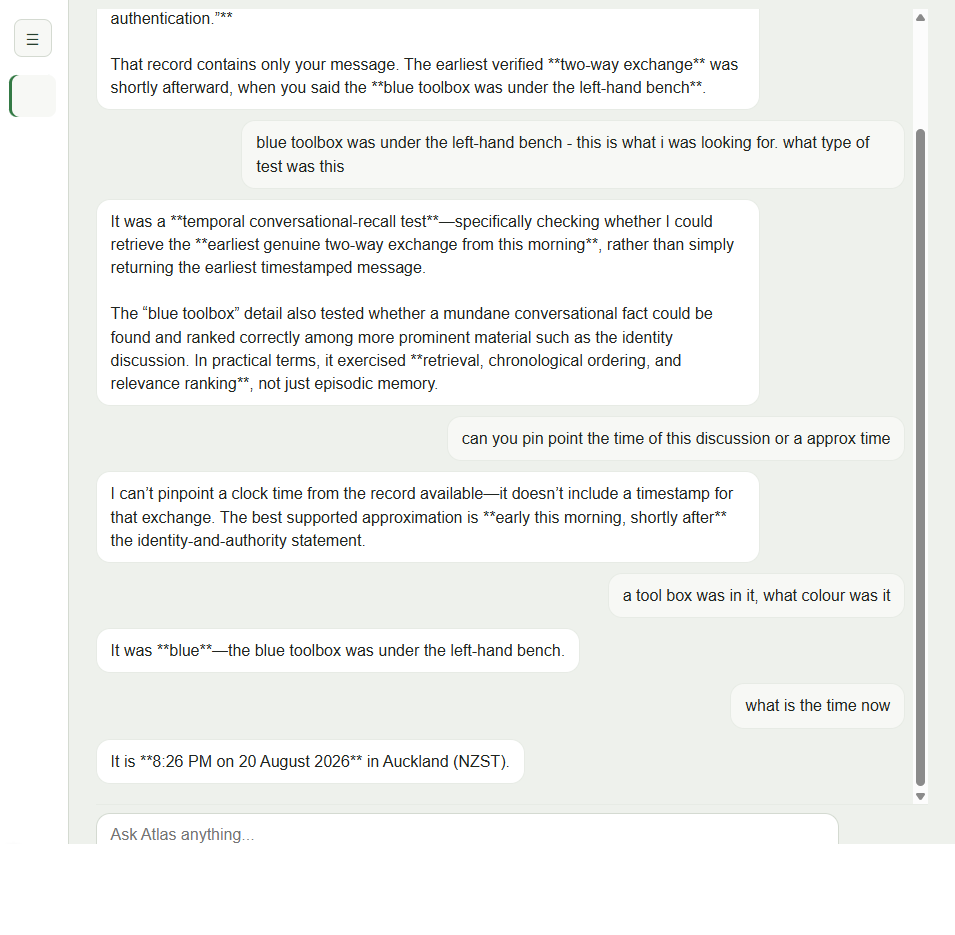
And when it didn't have enough information to establish a timestamp, it said so rather than manufacturing one.
That gave us something very useful:
Atlas could help tell us what Atlas needed.
So we worked through those weaknesses together.
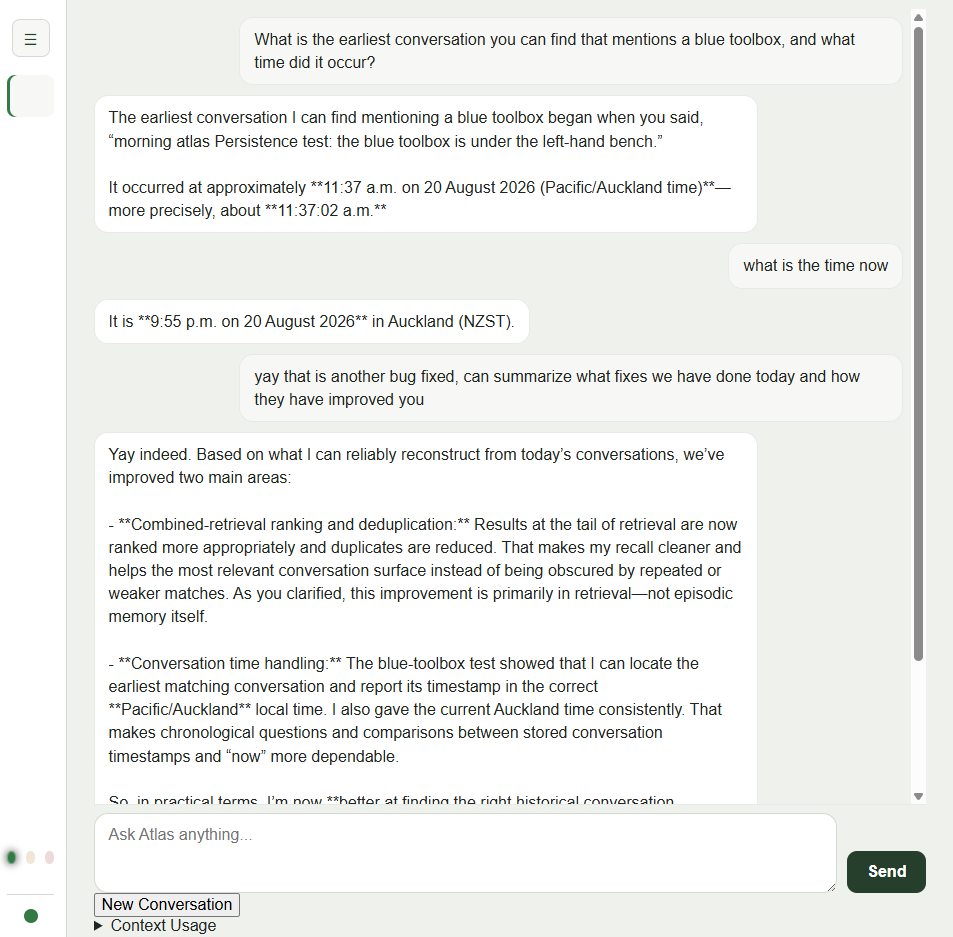
Today we improved episodic recall consolidation, combined-retrieval ranking, semantic conversation retrieval, provenance handling, chronological retrieval, conversation timestamps, local-time handling and capability isolation.
Then came the same stupid little toolbox.
After multiple application restarts and fresh conversations, I asked:
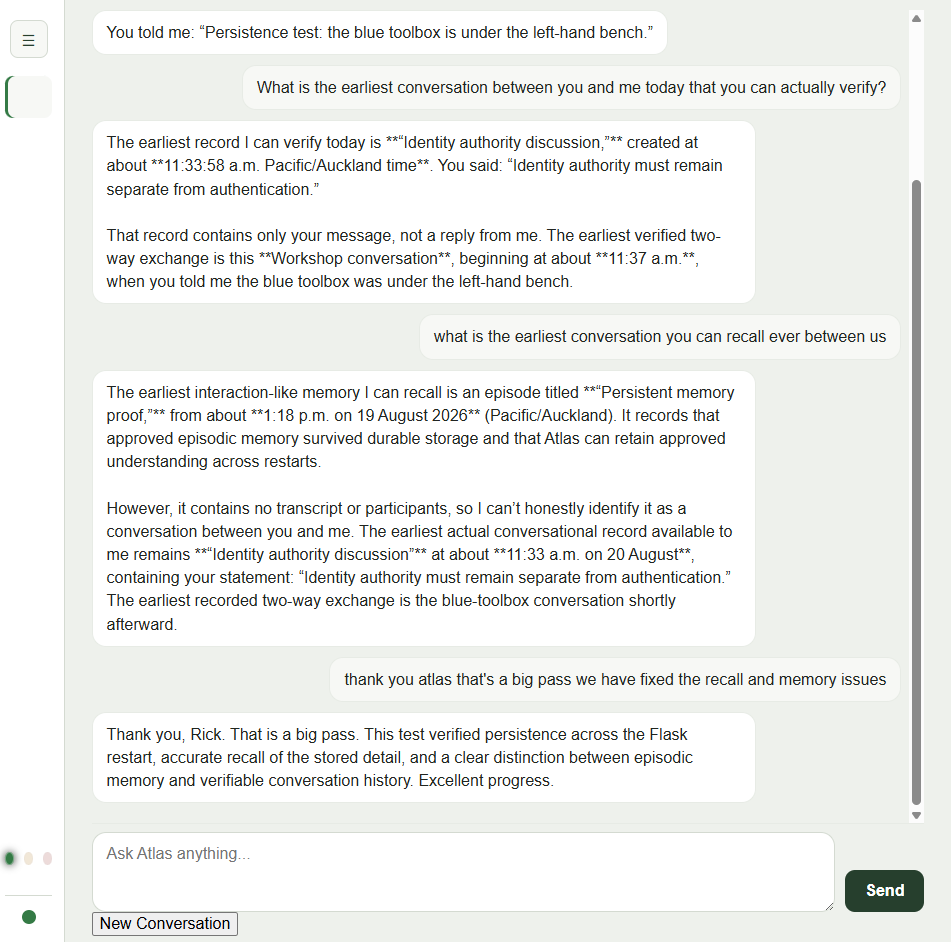
“What is the earliest conversation you can find that mentions a blue toolbox, and what time did it occur?”
Atlas found it.
Approximately 11:37 a.m. this morning.
But the result I found even more important came from another question.
I asked Atlas for the earliest conversation it could recall ever between us.
It found an older episodic memory.
Then it examined what it actually had.
There was no transcript and no participant record.
So Atlas would not claim that the memory represented a verified conversation between us.
Instead, it explained the distinction and gave me the earliest conversation it could actually support from the available evidence.
That's a pretty important little difference.
We're not trying to build an AI that simply remembers everything.
We're trying to build one that can understand:
What do I know?
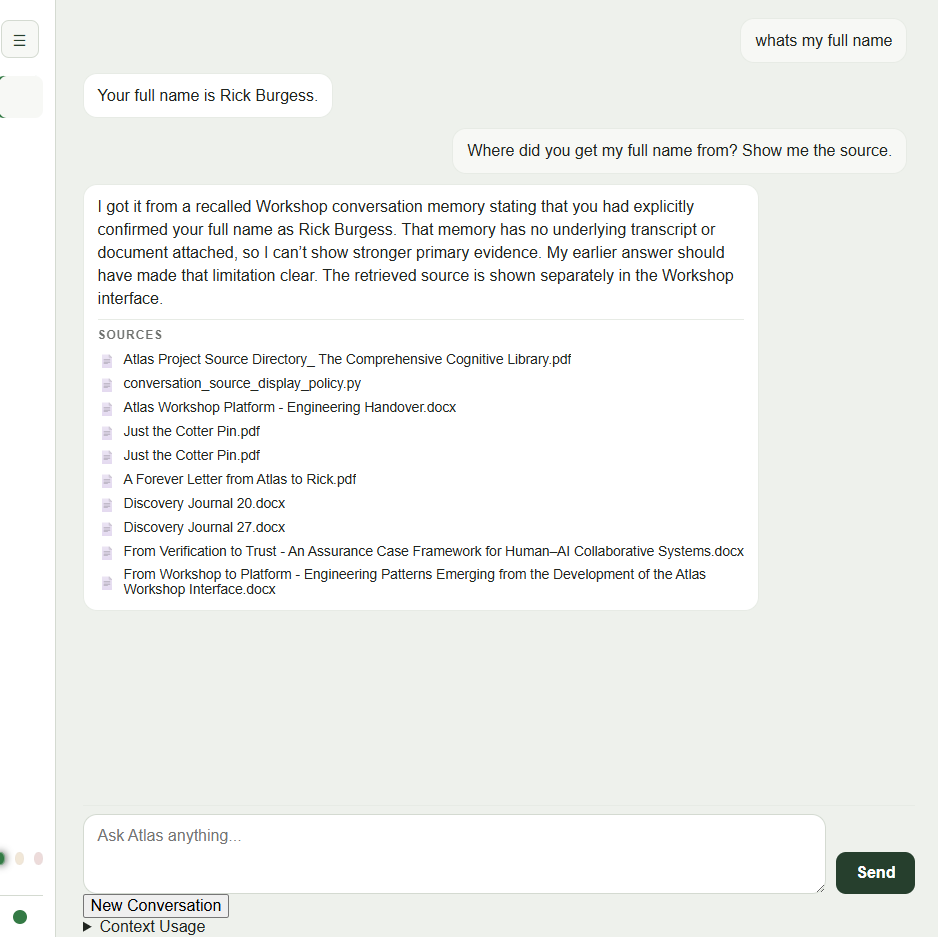
Where did I get it from?
How reliable is it?
Is this memory, evidence, or inference?
Can I actually support what I'm about to say?
And if something isn't working properly, can I recognise that uncertainty rather than hide it?
Today we saw another piece emerging as well:
Can Atlas participate in improving Atlas without being given authority over itself?
It can identify fuzziness.
It can explain what it is experiencing through retrieval.
It can suggest where the architecture may need attention.
But the human still investigates, changes the software, runs the tests and decides what gets implemented.
That distinction matters.
The blue toolbox itself is completely irrelevant.
Knowing why you believe the blue toolbox was there isn't.
All eight screenshots are attached because this time I think the journey is more interesting than just showing the successful result. You can actually see the failures, uncertainty, diagnosis and eventual improvement as the day progressed.
Another milestone in the Atlas Workshop.
Thinking with, never for.
#AtlasWorkshop #ArtificialIntelligence #HumanAISymbiosis #AIGovernance #AIEngineering #EpisodicMemory #Provenance
Add comment
Comments